From December 2025 to April 2026, i4Policy supported the inception phase of the Ghana Green & Digital Inclusive Private Sector Development programme alongside Expertise France and partners working under the EU Global Gateway framework. The work focused specifically on the policy and ecosystem dimensions shaping green and digital SME development in Ghana’s Creative and Cultural Industries (CCI) and Health & Pharmaceutical sectors.
As implementers of the inception study, our role was to map the policy landscape, engage ecosystem actors, identify barriers and opportunities, and help surface practical pathways for future programming and intervention design. The process combined ecosystem diagnostics with participatory engagements designed to ground policy conversations in lived realities rather than assumptions.
Participatory policymaking at the forefront
Remaining true to our mission, participation was at the heart of the engagement process. Across the study, we worked with entrepreneurs, regulators, ecosystem support organisations, creatives, health innovators, development partners, and public institutions to better understand how Ghana’s green and digital transitions are unfolding in practice.
The engagement process included:
- 12+ Key Informant Interviews (KIIs) with ecosystem actors across both sectors;
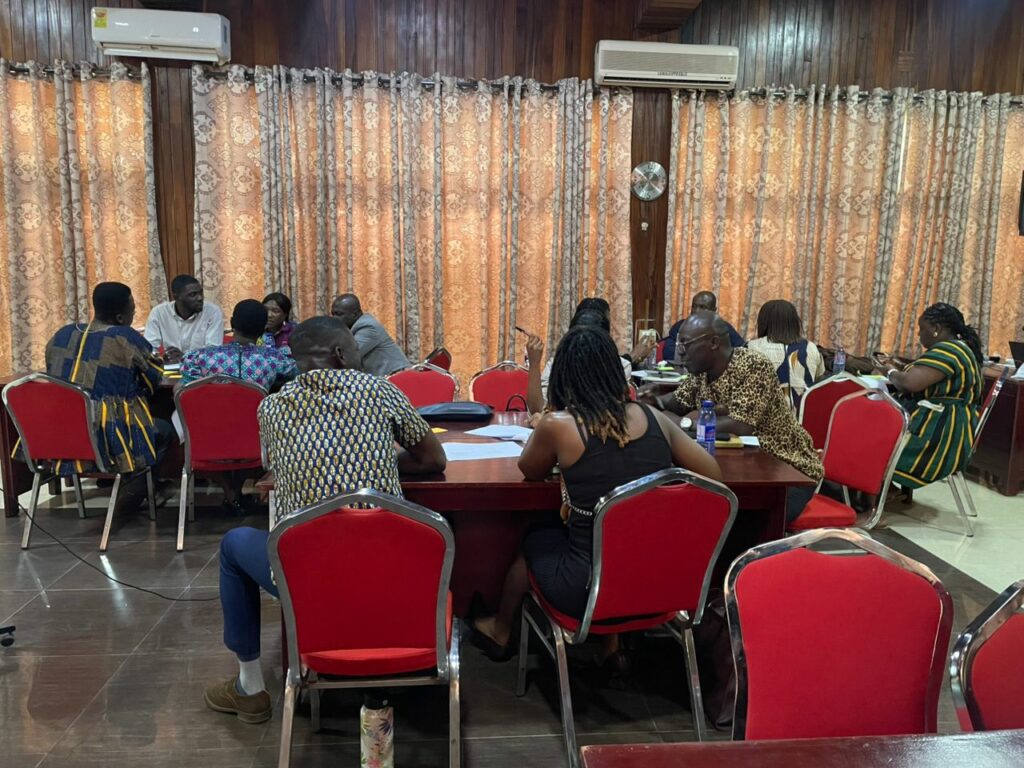
- 2 Focus Group Discussions (FGDs) bringing together regulators, SMEs, and support organisations;
- 1 Validation Workshop to refine and prioritise findings;
- 1 Dissemination Workshop organised by Expertise France focused on sharing insights and discussing next steps.
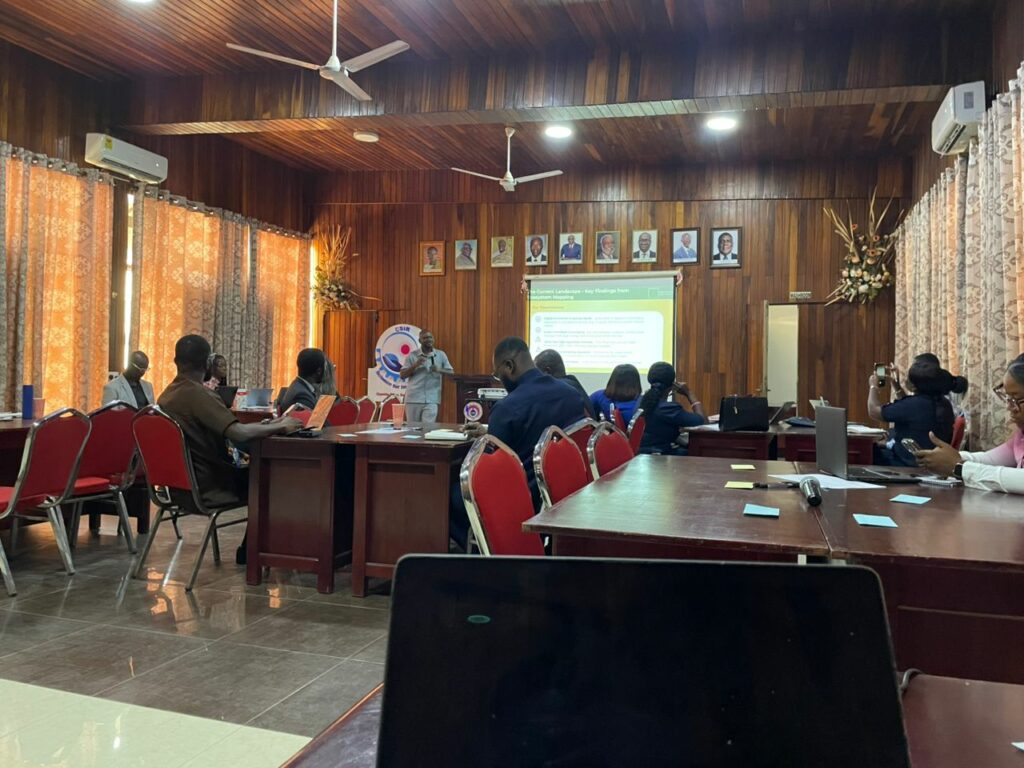
The discussions were incredibly layered. In one conversation, stakeholders discussed telemedicine regulation and data governance. In another, creatives explained how difficult it can be to certify upcycled products or monetise digital content in systems that were not originally designed for newer creator-economy models.
What became clear very quickly was that green and digital transitions are already happening in Ghana, but often faster than policy and institutional systems are adapting around them.
What we discovered
One of the strongest findings from the study was that Ghana’s “green” and “digital” transitions are still largely happening in parallel rather than as one coordinated “twin transition.” Digital adoption is advancing relatively quickly across both sectors, while sustainability efforts remain more fragmented and harder to operationalise.
Across engagements, stakeholders repeatedly highlighted:
- fragmented regulatory systems;
- overlapping institutional mandates;
- high compliance costs for SMEs;
- weak coordination between agencies;
- and ecosystem support structures concentrated heavily in Accra.
The research also surfaced strong entrepreneurial experimentation despite these constraints. Entrepreneurs in the Health sector discussed their journey to building telemedicine platforms and digital traceability systems. Creative entrepreneurs shared experiences using digital platforms, circular production methods, and sustainable materials to rethink production and distribution models.
Working through ambiguity in real time
Internally, the process required a constant balancing act between depth, timelines, logistics, and synthesis.
One of the biggest strengths of the project was having teammates physically on the ground in Ghana while the research was ongoing. That local presence made it possible to adapt quickly when schedules shifted, stakeholders became unavailable, or logistical challenges emerged unexpectedly.
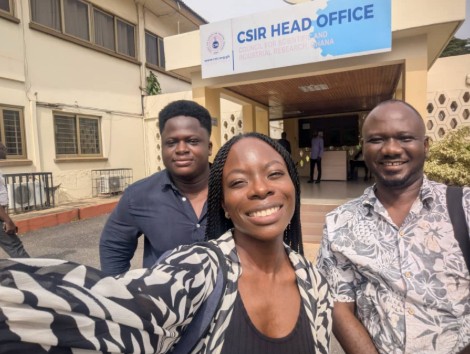
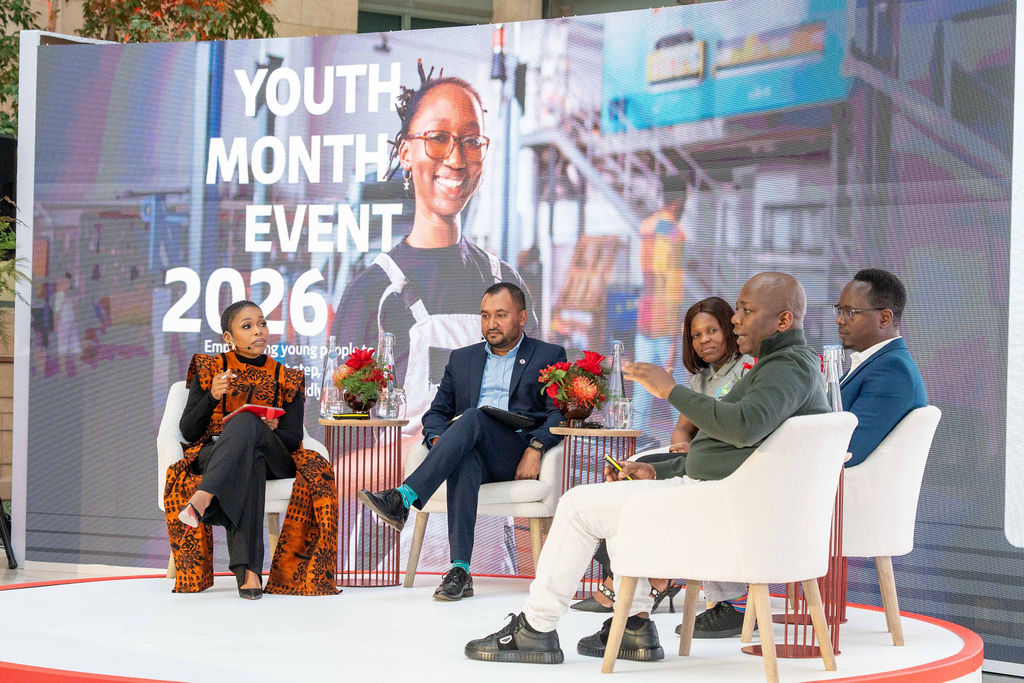
From left to right: Emmanuel Martey, Rachel Akrofie(middle), and Blaise Bayuo.
At the same time, the pace of the engagement meant continuously making difficult decisions about scope and prioritisation. Ironically, one of the hardest parts was not gathering information, but filtering it. There were so many rich conversations, perspectives, and ecosystem dynamics unfolding simultaneously that the real challenge became deciding what was most relevant and actionable within the timeframe of the inception study.
The process also highlighted some important tensions around inclusivity. While the engagement achieved close to gender parity between women and men participants, logistical and timeline constraints limited participation from outside Accra, with only one stakeholder directly engaged from another region.
That experience reinforced something we often see in ecosystem work: participation is not just about inviting people into the room. It is also about the infrastructure, timelines, funding, and coordination required to make broader participation realistically possible.
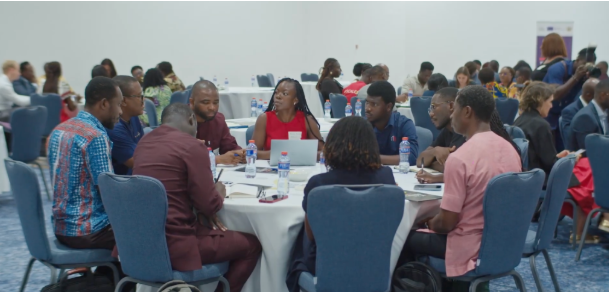
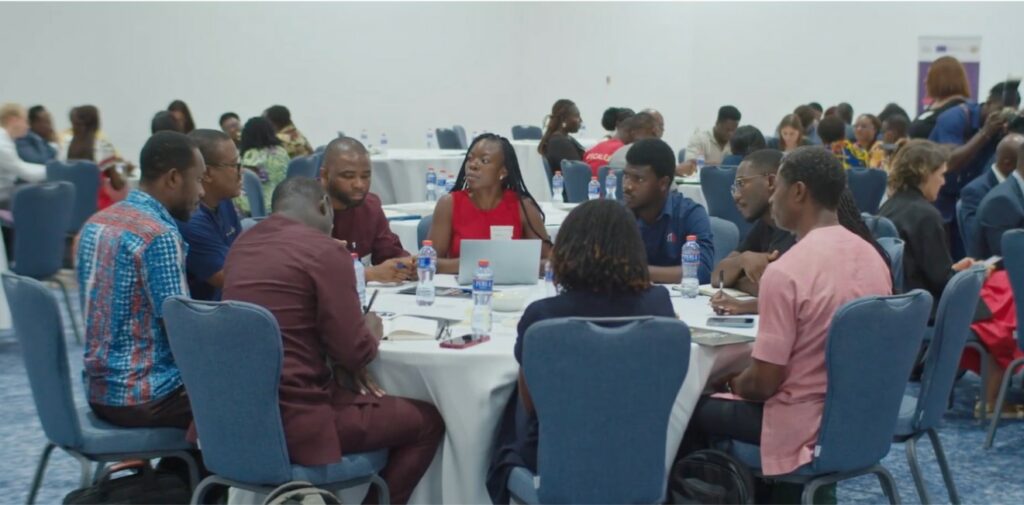
The dissemination workshop, hosted by Expertise France in April 2026 reflected a deliberate effort to make the process more participatory and grounded in diverse ecosystem perspectives. Recognising some of the participation limitations encountered earlier in the study, the team mobilised additional logistical and financial support to bring together as many ecosystem actors as possible for an in-person engagement.
The workshop gathered around 70 participants, including public institutions, entrepreneurs, creatives, health innovators, ecosystem support organisations, development partners, researchers, and regulators. Throughout the day, service providers presented findings from their respective studies before participants moved into smaller breakout discussions focused on themes such as entrepreneurship support and regulatory bottlenecks.
A reminder about the intricacies of work on the ground
This engagement reminded us that ecosystem and policy work rarely moves in a straight line.
Stakeholders shift. Priorities evolve. Timelines tighten. Conversations open entirely new directions halfway through the process. And sometimes, despite careful planning, not every stakeholder you initially hoped to engage becomes part of the process immediately.
That is okay.
One of the biggest lessons from this work was learning to remain flexible while still moving the process forward. Consistent outreach, adaptive facilitation, and a willingness to work through ambiguity became just as important as the technical research itself.
Because in many ways, inception work is exactly that, a starting point. A process of building relationships, identifying patterns, and creating enough shared understanding for deeper collaboration to continue afterward.
Written by Aniya Hamilton